
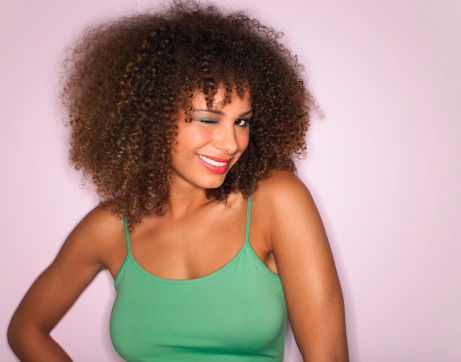
(VIA) When you grow up in a relatively small town in suburban New Jersey, being the only person of color in your class, you’d understand why I had no idea that other members of my race consider me “light-skinned.” Where I grew up, there was no such thing. You were either black, white, Spanish or Indian. No one paid much attention to the shade of your skin or where your blackness/whiteness originated –at least not in my circle. You only cared about what you saw. Sure, some racism and stereotyping existed, but there was no in-depth analysis or scrutiny about the shade of your skin.
In some ways that method was great. It erased the turmoil experienced by many other African-Americans and allowed everyone to just be accepted for who they were. On the other hand, my peers and I were ill-prepared for the real world. We grew up a bunch of colorblind individuals who believed in treating everyone equally regardless of historical implications and racial indifferences. We were ignorant.
For as long as I could remember, I was always the only brown-skinned girl in class and the only one at a friend’s birthday party. For the most part, I was OK with that. Aside from the random kids who asked if I celebrated Kwanza or why my kinky hair looked different from the straight-haired Caucasian girl, or the assumption that I was an expert on slavery in class, I was fine. For a majority of my life, nearly all of my friends were white. Other than my obvious darker complexion, I fit in just fine with the other kids. No one ever questioned why I was so light in comparison to my parents during my younger years. And no one ever attributed my “likability,” pleasant disposition or achievements to my skin tone.
So imagine my surprise when a black girl in college accused me of thinking I was better than everyone else because I was light- skinned. I was dumbfounded, not only because that type of thought had never crossed my mind, but also because I never considered myself light-skinned. I’d only ever identified as black, brown, or African-American.
Being the very naïve 18-year-old that I was, I asked her, “What are you talking about?”
She said, “Don’t play dumb with me. You know exactly what I’m talking about. With the way guys keep falling all over you and professors like you because you are light, you think you are better than people like me.”
As a simple-minded girl, my answer was, “But I’m not light-skinned.”
To which she replied, “Well, what do you think you are then?”
“A black woman.”
[Read more of her story at TheFrisky]



Usually others will point out how light skin you are before you actual acknowledge it to a group of people to try to use it as some type “prize”. A lot of time people suffer from their own personal color complex and want you to join in.
I don’t know what’s worse the “You think you better than me” or “o0o you think you cute”.
IDK too many light skin black women who respond “I’m light skin” when asked “What are you”. I’m guessing a good amount say “black” then people refuse to believe that you can be just “black” so then they go “and what else, you know you mixed, you so light”.
I didn't know I was light-skinned until I came to NYC. I knew I was lighter than some Black people. My mother, who is darker than I am, is very conscious of skin colors and doesn't like the idolization of light-skinned Black people (often bi- or multi-racial) over darker-skinned Black people in the media, so I've always been aware of that, but I didn't really deal with that individually until I was grown.
Then it was guys talking about, "I love a redbone like you", or some nonsense like that. I had to infer what that meant on the fly. Hadn't heard that term. Also, compared to some women in my close circles, I don't think I'm light enough to even mention. But hey, if they like it, I love it. I'm just me. You'll never hear me use light-skinned as an adjective for myself, except in a conversation like this, in which it's being explicitly discussed.
What I find interesting ( and dad I guess) is that white people are never the ones to point out the fact that Im light skinned. Black people are always the first ones to ask if Im mixed. White
What I find interesting ( and sad I guess) is that white people are never the ones to point out the fact that Im light skinned. Black people are always the first ones to ask if Im mixed (I’m not). White people on the other hand don’t ask because they don’t care. They know regardless that I’m black either way. Also, you don’t see black men making a big deal out of each other skin tones). Smh
What I find interesting ( and sad I guess) is that white people are never the ones to point out the fact that Im light skinned. Black people are always the first ones to ask if Im mixed (I’m not). White people on the other hand don’t ask because they don’t care. They know regardless that I’m black either way. Also, you don’t see black men making a big deal out of each other skin tones. Smh
This may sound kind of weird, but depending on what season it is (summer, winter) I don't keep the same color! I never really thought about my skin color. I didn't realize it until after the relationship started to fall apart, but I once dated a dark skinned guy that ONLY dated lighter-skinned women. I was confused because 1) Why only date one "color" and 2) I just thought of myself as ……brown. Also, many people "assumed" that I'm a stuck up person (I guess because of my skin color??) before they got to truly know me as a person. That kinda hurt.
To everyone that isn't Black, I'm a BLACK person. Bottom line. I consider myself a Black person. This is 2013 and colorism exists, but it shouldn't. Let go of the hate. We all have the same struggles.
I'm the first to admit that I have a color complex. I think I'm darker than I actually am. I tan, and my make-up is a lil darker than my actually skin color. I like being what I call "golden bronzed". Judge me not. I just like to think that I'm not judged by my exterior, which in reality we all are. And I absolutely hate it when people want to argue my ethnicity. That is the WORST.
*shrugs* Gowing up in the south I would say more individuals are made aware of their skin color. It's just how it is. However at the end of the day, we all black. The comparison of skin colors/tones make it easier for categorization to perpetuate self-hate. This is also perpetuated in media and music. "Yellow model chicks, red-boned, light-skin long hair (straight, permed, natural, whatever)" The references are endless.
I love this article! It’s interesting how unaware of your skin color you can be until you move to a place that is predominantly African American. Although I am not “lightskin” I can relate to the poster because I was never really aware I was “darkskin” until I moved to a city with a large African American population (Houston) and were reminded of it quite frequently along with the fact that I am “proper”….I new I was black but I never saw someone lighter than me and thought out she thinks she’s better or what have you. I just thought she was was black and so am I…
Thats because black people are racist. You’re waking up, don’t fight it.
I am sorry but I just have to comment on this article. Her naivete really bothered me. I am a light skinned black woman. I, like her, was the only African-American in my high school classes. When talking about slaves or racism I was the go to person. When we were supposed to watch a movie about the KKK my teacher approached me before class and told me if at any point during the video I could leave if I felt uncomfortable. I reminded the teacher that the other students (white) should feel uncomfortable watching it, not me. Anyways, my stories about race in school can go on forever.
To address the whole "color-blindness" issue. Her school had no diversity, just like mine. That doesn't make you color blind. You still have tv, people still travel, outside of the high school other people of color exist. From my experience, white people who are not exposed to diversity are NOT color blind. I have read through some of the comments that black people are the only ones to point out that someone is mixed. Have you ever thought about WHY??? From my experience, white people are surprised that people CAN BE mixed. There was one kid in high school who was utterly shocked that my grandmother could have possibly been white. They just don't think about it. Black people on the other hand, recognize that cultures and races mix and that it happens quite frequently.
The author should be able to look at her complexion and her mother's and realize that she is lighter. Look at the people around you – be aware of what happens in the world. There are people much darker than you, there are people much lighter than you. It is okay to acknowledge that you are light-skinned. It is NOT okay to associate ANY kind of privilege with your complexion whether you are white, black, yellow, orange, tan, brown – WHATEVER. I am not saying she did.
I am okay with saying I am light skinned – because it is just that. light. skin. When people ask me what I am, I do not say light-skinned. I tell people I am black (sometimes I get confused faces – once I explain where my color comes from no one judges my "blackness"). There are problems with skin color, not just in the black community, but in the indian community, latino community, and many others. I am not better than anyone because of my complexion, nor is anyone better than me. GEEZ. get over it!
Next time tell the woman who insulted you to get over her insecurities and stop putting other people down.
light skinned people bother me. what is this article trying to accomplish? it sounds like something a white person would say. lets all just be humans, lets all just be americans, lets all just be black. well in some cases, we not.
Signed,
fellow light bright.
My word insecurity is a mother! Although I am so grateful I didn't grow up during the Civil Rights era, sometimes I wish my generation had because we allow so much to divide us to the point its sickening….STOP THE MADNESS!!!!
A very close childhood friend of mine is very light (speak Paula Patten a shade or two lighter). Her grandmother is white but she is the lightest in her family of fairer skinned people. She ahs the wavy/curly hair and all that. But she has to be the only light skinned person I know who absolutely HATES being light skinned. She experiences a great deal of racism than most darker skinned people I know. She is always approached with the whole "You think you're white like us don't you?" Or she has the black men who fawn all over her because the top and bottom of her feet are the same color. I think she will stab someone who calls her redbone. She says that all her life men only liked her or were initially attracted to her because she is so yella.
And she is always saying that two light skinned people shouldn't be together or have kids or that she should't wear reds, oranges, or yellows because light skinned people just look more pale. Shecan't even tan. Will be outside doing yard work all day and not even get a tan line. So, from her perspective I ca sympathize, but in my experience most lght skinned women do have an air of "higher than mighty". But as someone above stated, that is because other people have made it a big deal and give them the idea that they are in fact better because of it.